
About OPEN WIDE THE DOORS
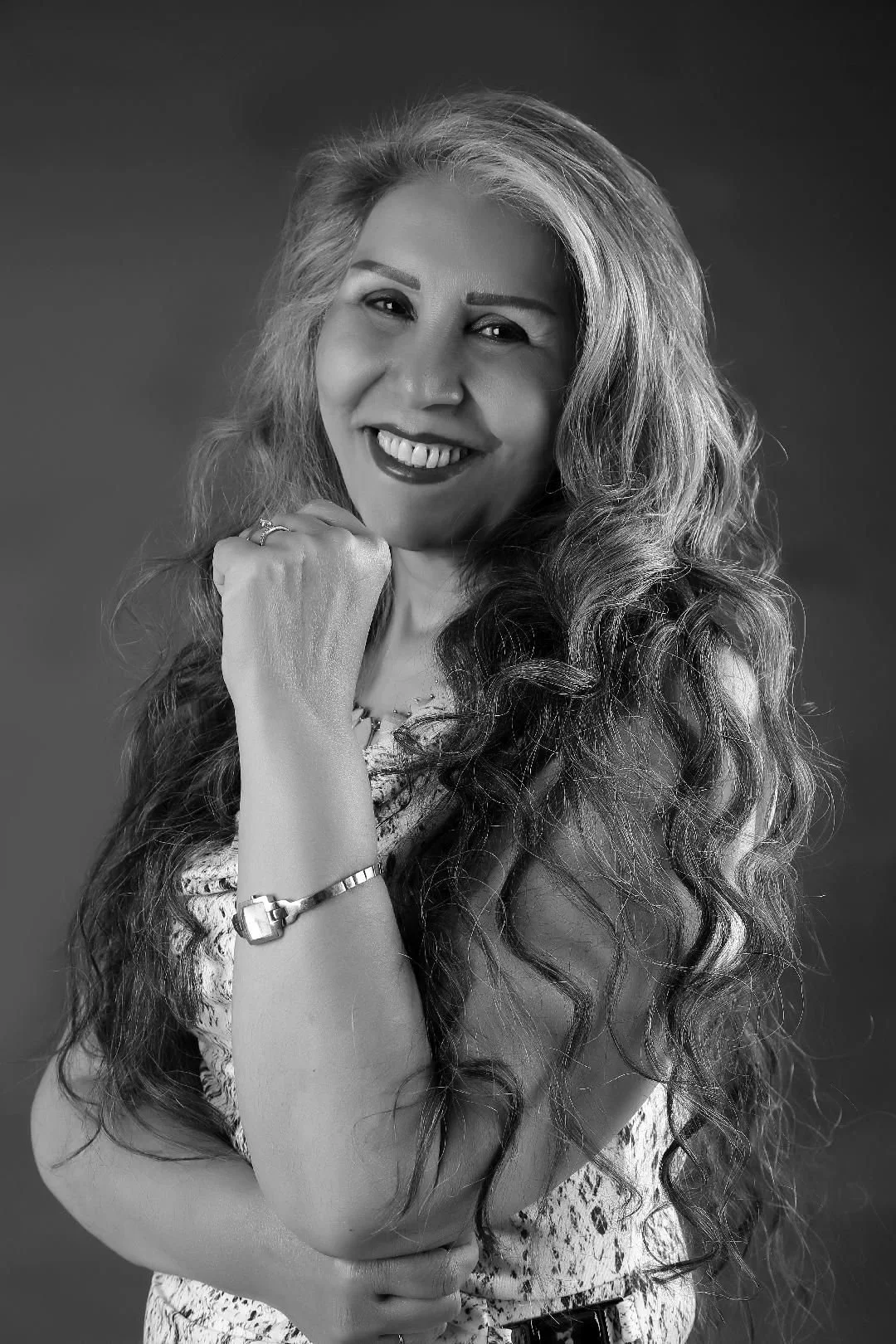
Mahvash Sabet is a prisoner of conscience in Iran, condemned for being a follower of the Bahá’í Faith. Over the past twenty years, she has been incarcerated in four Iranian prisons, arrested on three separate occasions and held for thirty months without trial. She has twice been given ten-year sentences because of her beliefs, the first time in 2008 and most recently in 2022. In May 2025, there was a call at the European Parliament for her unconditional release, on humanitarian grounds. It has, until now, been ignored.
Born in Ardestan on 4 February 1952, Mahvash grew up in the provincial town of Zavareh, where she was first exposed to fanaticism and prejudice against the Bahá’í Faith as a child. When she was about ten years old, her family moved from the provinces to the capital, enabling her to continue her education in Tehran. A bright student with a flair for poetry, she later received a bachelor’s degree in social sciences at Reyhan University, and embarked on a teaching career soon after her marriage to Siyávash Sabet on 21 May 1973. After several years, she became the principal of 21 Farvardín, a prestigious school in District 13 of Tehran, and later directed the school of Tehran’s Air Force Base personnel. She was also invited to serve on the National Literacy Committee of Iran, as a respected education professional.
But everything changed, for Mahvash and many others, when the Islamic Republic came to power in 1979. It changed catastrophically for the 350,000 Bahá’ís, members of the largest religious minority in the country.
When the Bahá’í Faith first emerged in Persia in the middle of the nineteenth century, its message of social justice and religious renewal swept through the land like wildfire, causing consternation at court and a crisis among the clergy. The mullahs, their authority already weakened, felt threatened by the claim that religious truth was relative, not absolute. The newly crowned Qajar monarch Naser al-Din Shah feared insurrection and the loss of power, as his people protested against corruption. So from the mid-1840s onward a campaign of persecution was launched against this Faith, killing over 10,000 adherents in the last half of the nineteenth century alone, and double that number by the beginning of the twentieth. The Báb, the young forerunner of the Bahá’í Faith, was repeatedly imprisoned before being shot in Tabríz in 1850. Bahá’u’lláh, its founder, was banished to Baghdad in 1852, and later exiled for life to the fortress of St Jean d’Acre in Palestine, a penal colony of the Ottoman Empire. After Bahá’u’lláh passed away in 1892, the remains of the Báb were brought to rest on the slopes of Mt Carmel, making the twin cities of Haifa and Akka a focus of prayer, pilgrimage and the point of adoration for the Bahá’í community, long before the state of Israel was established in 1948.
Over the course of the twentieth century, the Bahá’í Faith continued to be persecuted in the land of its birth. Bahá’í properties and lives were ravaged in towns and villages under both Pahlavi governments. Anti-Bahá’í propaganda was unleashed on radio programmes by radical clerics during the 1950s, and the National Bahá’í Centre in the capital was occupied by the military and partially destroyed in 1955. But throughout the same period, this Faith grew to become the second most widespread religion in the world, with some seven million members in more than 230 countries and adherents from many cultures, races and spiritual backgrounds. Its internal governance depends not on individuals but on institutions, voted for by secret ballot, locally and nationally. At the head of this essentially spiritual system of administration is the Universal House of Justice, elected every five years to guide and govern the affairs of the Bahá’í world from its seat in Haifa.
However, within months of Khomeini assuming power, the new Iranian theocracy branded this entity as ‘political’. And despite the Faith’s roots in Persia, its world centre in present day Israel gave the regime a spurious reason to accuse Bahá’ís of being ‘foreign spies.’ From 1979 on, their persecution became systematic. From one day to the next, Bahá’ís were ‘disqualified’ from civic life and denied the protections extended to other religious minorities in Iran’s constitution. Bahá’í professionals lost their jobs; Bahá’í-owned businesses had permits withheld and ultimately confiscated by the state; Bahá’í children were harassed and hounded from schools; Bahá’í students were expelled from and denied access to university; Bahá’í cemeteries were destroyed and sacred Bahá’í sites were razed to the ground. And, along with thousands of other Bahá’ís, Mahvash was fired from her teaching position and permanently barred from working in the public sector.
During the so-called Iranian ‘Cultural Revolution’ which followed, the Bahá’í Administrative Order was specifically targeted, and its institutions duly decimated by the government. Between 1980 and 1983, all nine members of the National Spiritual Assembly of the Bahá’ís of Iran were abducted, never to be seen again, eight members of a newly elected National Assembly were executed without trial, and scores of Local Assembly members across Iran were similarly taken into custody and killed. Finally, when a legal ban was officially announced against their administration on 29 August 1983, the Bahá’ís dissolved all elected institutions in the country, in compliance with their principles.
From then on, and with the tacit approval of the authorities, an ad hoc group of first three, then five, and finally seven individuals were appointed to be community caretakers. The Yárán-i-Irán, or Friends of Irán, were responsible for registering births, marriages and deaths as well as providing financial and medical support, counselling services and training programmes to help the oppressed community. Among the many services they developed was the Bahá’í Institute of Higher Education (BIHE), a remarkable project founded in 1987 to ensure university education for students. It now offers more than fifty-six academic courses in the sciences, engineering, business management, social sciences and humanities which are recognised by 115 universities worldwide. Mahvash became its first director and served in this capacity for fifteen years. In 2005, she was also appointed to be one of the ‘Bahá’í Seven’ – as the last group of the Yárán came to be known – and was its secretary for three years. Imprisoned in the notorious Section 209 of Evin Prison in Tehran that same year, she was released after thirty-four days, then arrested again on 5 March 2008.
And that is when this story begins.
Covering ten months of Mahvash’s incarceration – from March to December 2008 – this memoir describes the beginning of her first ten-year prison sentence. It was a gruelling time of unmitigated solitude. She was unable to communicate with anyone while in the detention centre of Mashhad, and friends and family were kept in ignorance of her fate for the many weeks she was holed up in the public prison of Vakilabad. Eight months would go by before anyone was allowed to visit her in Evin Prison and she was also separated for most of this time from her fellow members of the Yárán. Only at the very end of this period was she finally reunited with her dear friend and colleague, Faribá Kamalábádí, who is still imprisoned at this time, condemned like Mahvash to another decade of incarceration.
This is an intensely personal story. Written in unvarnished prose, the writer’s honesty and sincerity are palpable and her self-doubt as well as her faith shared. She describes her fellow prisoners with unwavering compassion, while depicting her own experiences without a trace of self-pity. She records the attacks against her beliefs as well as her defence of them without exaggeration, and endures her isolation with a biting wit. Her characteristic irony is as much a survival mechanism as a literary device.
The events described in these pages were compiled by Mahvash more than three years after they occurred and edited and translated with her approval almost a decade later. Real first names are used when permission has been granted or individuals are already in the public domain, and pseudonyms are given to officials associated with the regime. Days and months have been identified according to the Persian calendar, with Gregorian equivalences in parentheses. Mahvash was able to answer questions about her writing during her brief years of freedom, but once imprisoned again, it was impossible to reach her. All infelicities or inaccuracies in these pages must therefore be laid at the translators’ doors.
The third and most recent arrest of Mahvash Sabet took place on 31 July 2022, while she was recuperating from Covid-19 with her husband in the north of the country. She had to undergo four more months of solitary confinement, interrogation and physical abuse before being condemned to a second decade-long sentence. But we are dealing with that rare, almost mythic creature in this story: a reliable narrator. Mahvash may be a captive behind prison walls, but the truth she tells defies them. Her memoir was born of harsh injustice, but it bears witness to the endurance of love, the resilience of hope. She refuses to be bound. Her voice is free, her words ring true, and her story opens the doors of the heart.
A. Mottahedeh and B. Nakhjavani (2026) Introduction (pages 1-6). In OPEN WIDE THE DOORS: A Memoir of Faith, Hope and Freedom in Iran by Mahvash Sabet, Copyright © 2026 (Oneworld Publications, Ltd., London, UK)